Introduction to Julia for High-Performance Computing
Julia Training Week at ITCC 2026
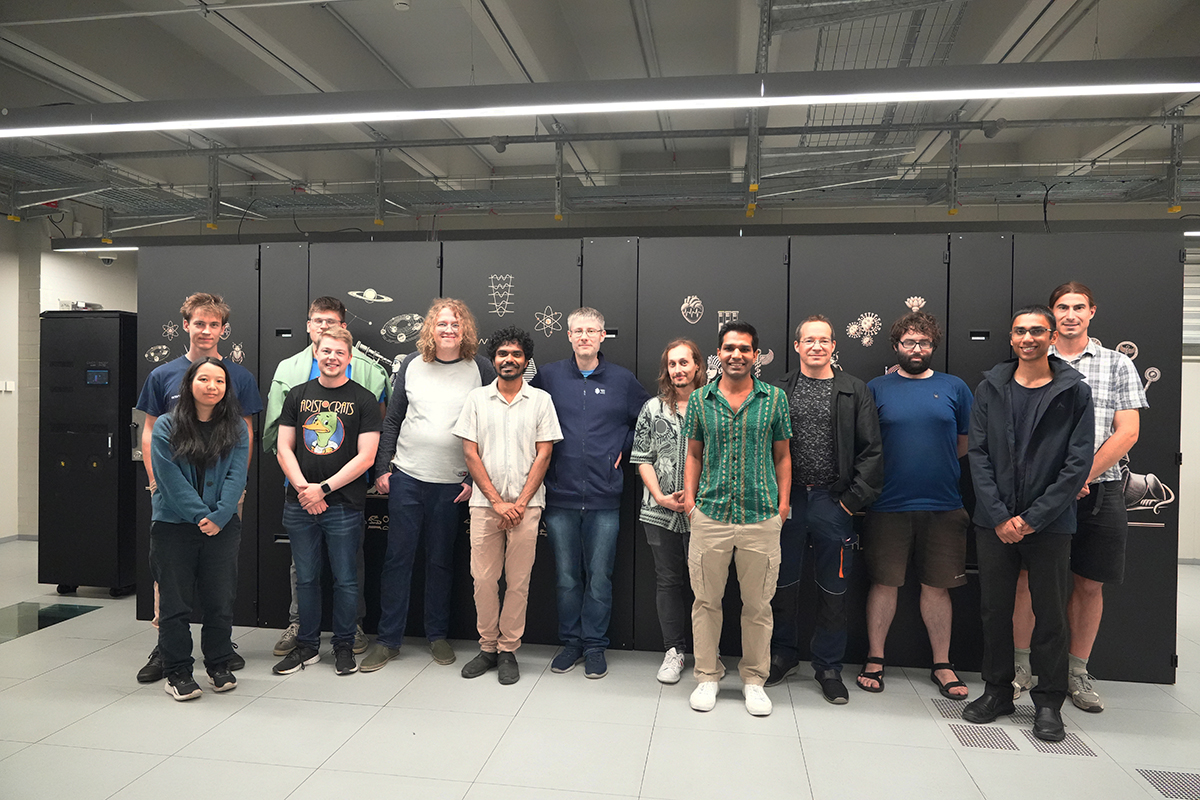
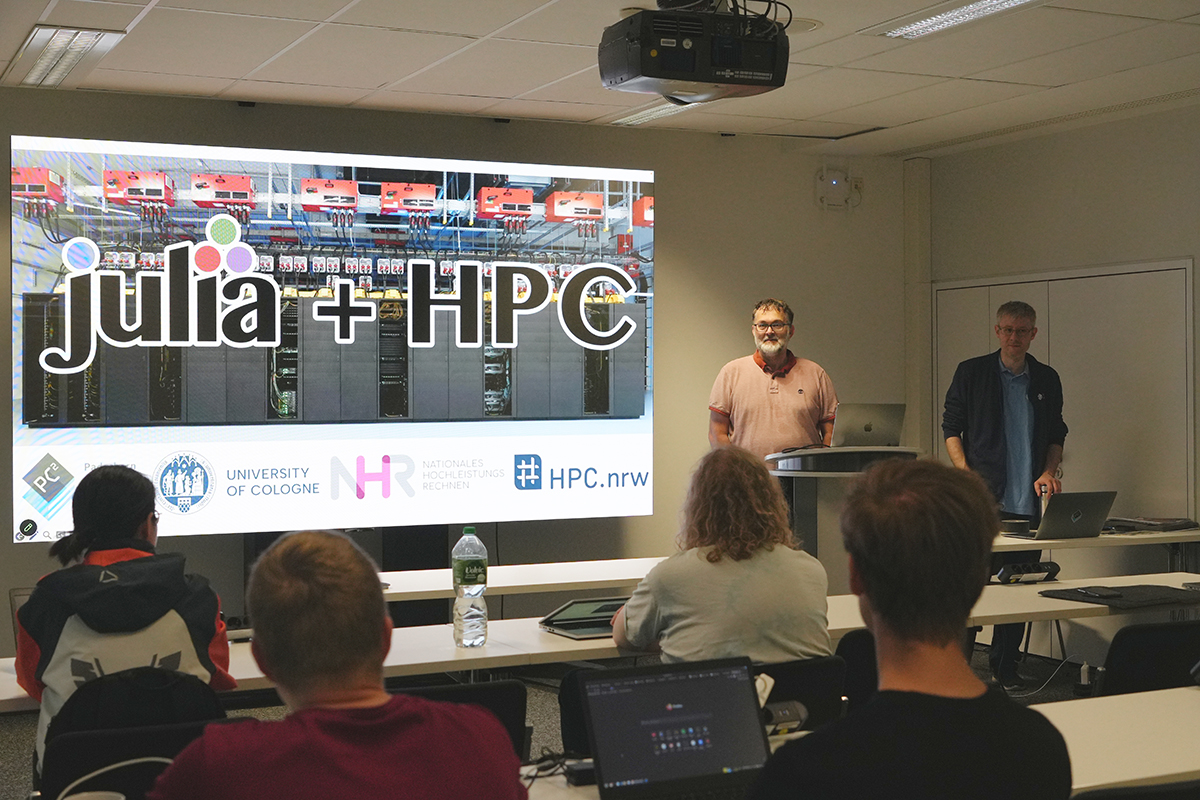
From August 18 to 21, 2026, the four-day course Introduction to Julia for High-Performance Computing was held at the IT Center of the University of Cologne (ITCC) in collaboration with the Paderborn Center for Parallel Computing (PC2). The training provided participants with a comprehensive introduction to Julia as a modern and efficient programming language for High-Performance computing and scientific machine learning (ML).
“Julia combines the ease of use of a high-level language with the performance traditionally expected from compiled languages,” said Prof. Dr. Stefan Wesner, Director of ITCC, in his opening remarks. “This makes Julia particularly attractive to researchers who want to develop flexible, scalable, and efficient HPC and ML applications.”
Julia for HPC and Scientific Machine Learning
The course combined interactive lectures, hands-on exercises, and Q&A sessions, covering a broad range of topics. These ranged from Julia fundamentals and workflows to code optimization, SIMD vectorization, multithreading, distributed computing, and GPU programming. This year’s training program was also expanded to include machine learning with Julia, providing participants with additional insights into the ecosystem of scientific ML applications. During the exercises, participants were able to apply their newly acquired knowledge directly and gain practical experience using Julia in an HPC environment.
From Fundamentals to GPU Programming
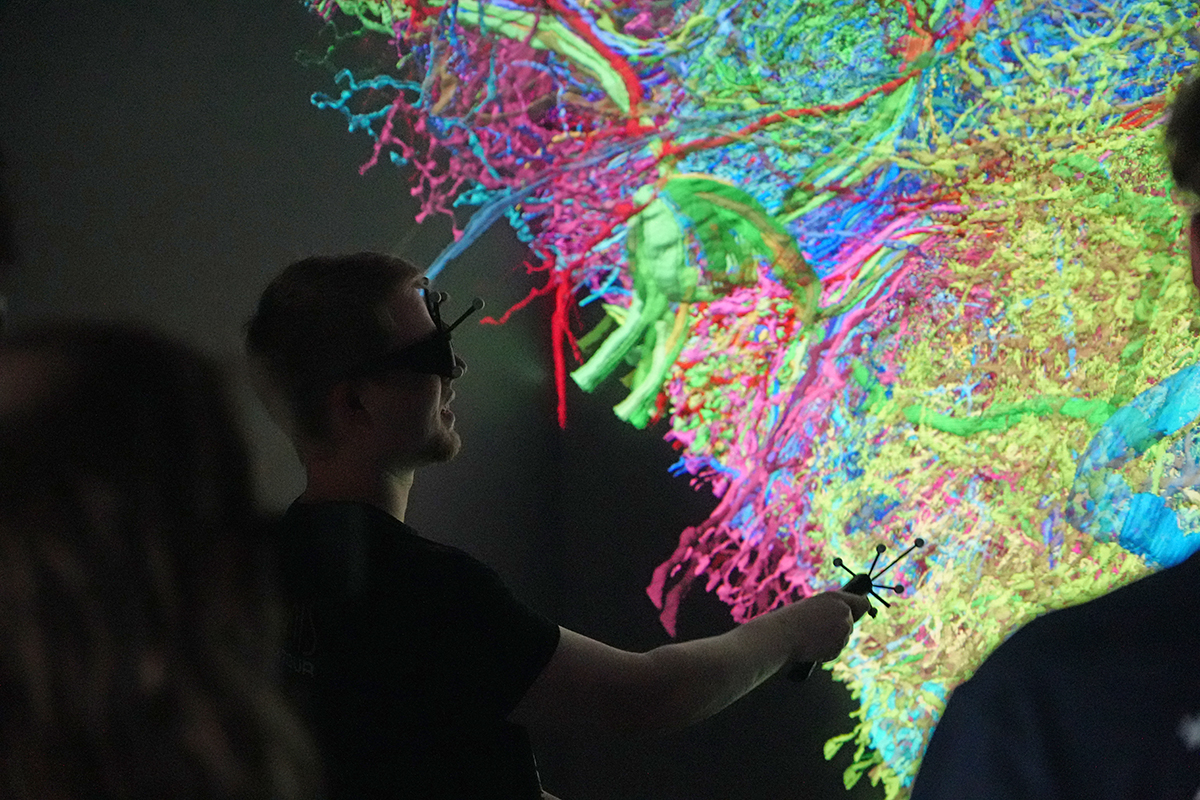
In addition to the training program, participants had the opportunity to visit the CAVE (Cave Automatic Virtual Environment) visualization facility and the HPC system RAMSES at ITCC. During breaks and at a joint dinner, they exchanged experiences and discussed possible applications of Julia in scientific HPC.
The hybrid event welcomed around 20 participants on site at ITCC in Cologne and approximately 40 participants online. The participants came from Aachen, Bielefeld, Bonn, Duisburg, Essen, Jülich, Cologne, Münster, Paderborn, Siegen, and Wuppertal in North Rhine-Westphalia, as well as from Berlin, Jena, Karlsruhe, and Potsdam. The course’s broad geographical reach reflects the growing interest in Julia within the German HPC community.
The training event was funded by the Paderborn Center for Parallel Computing, the IT Center of the University of Cologne, the HPC.nrw competence network, and the NHR Alliance.